Thursday, 2 February 2017

Coppicing Hazel And Silver Birch


Birch Coppice

Five members of the team, Ali, Kieron, Graham, Callum and Peter spent the day working with the arboriculturalists, tree surgeons, of  the University of Oxford's Harcourt Arboretum. The reason for their 'away day' was to coppice the birch and hazel for the creation of this year's plant supports on the herbaceous border and and a new border edge on the lakeside broadwalk respectively.

Cutting Down The Birch

They began their day in an area of 8 year old silver birch trees that required cutting down. These older trees had been used as a natural wind break protecting the younger, newly planted trees amongst them but, as these newer trees had established themselves, the older trees were no longer required and could be cut down and used for the plant supports. The birch occupies an area that was farmland just 10 years ago and since that time the birch has been allowed to colonise the land naturally and is now part of the managed woodland of the arboretum, the silver birch is known as a 'pioneer' species, one of the first species that will occupy suitable land.


Step Cut

Having been shown two different types of cut by the arboriculturalists, the step cut and gob cut, the team, preferring the step cut, cut down 130 birch trees and dragged them to the awaiting trailer where they were processed, the thick lower trunk was cut off and discarded for chipping leaving the multi branched top lengths of 8 to 10 foot, perfect for a plant support. For birch plant supports see blog entry 15th March 2011, 'Basket Weaving'. The remainder of the trunk below the step cut was then cut down to a few inches above the ground, known as a stump or a stool, and will regrow as the dormant buds burst into life creating new, replacement birch trees.


It Takes Two

Dragging The Birch

A Birch Stool

A Trailer Full

Once the team had finished cutting down the birch they moved on to the hazel coppice. The hazel has produced many 'rods' since it was last 'coppiced', cut down, about 5 years ago and is ready to be coppiced again, these rods being perfect material for the basket weaved border edging.


Hazel Coppice

Hazel

The hazel was cut down to 2-3 inches above the ground using a chainsaw, the remaining stool, as with the birch, will create new growth from the dormant buds.

A Hazel Stool

Cut Down Hazel

The cut down hazel was then processed, the branches and side shoots removed using a billhook to create a clean, single rod of hazel. The bent, curved, crooked rods were also cleaned but cut in to pieces to create piles for natural homes for wildlife, and the thicker pieces will be used as hedging stakes.
 

Bill Hooking The Hazel

Perfect Cleaned Hazel Rod

The Team Bill Hooking Hazel

By the end of the day the team had cut and processed 130 birch trees and a similar amount of hazel rods, both of which will be delivered to the college tomorrow. The new hazel basket weave edge will be created next week and the birch plant supports in the spring, April-May.

Processed Hazel

Ready For Delivery

 Billhook

A Nature Pile

Update
The pictures below show the basket weaved edge using the coppiced hazel rods.

Hazel Basket Edging 6th February 2017

Basket Weave Edging

Monday, 30 January 2017

January, The Month For Winter Pruning


Campsis, Roses And Wisteria On The Top Terrace

Apart from the daily maintenance tasks, and the larger tasks of applying a leaf mould mulch to some of borders and the removal of a number of years growth of ivy from the Head of Gardens and Grounds office roof, the main focus in January has been the pruning of the many climbing plants and fruit trees in the gardens.

Climbing Roses On The Front Of The Cottages

The college gardens are graced with many climbing plants, some very old and some recently planted, as well as an orchard full of fruit trees. The reasons for pruning all of these climbers and trees is to encourage the production of flowers, for fruit trees the more flowers means more fruit, along with removing the dead, damaged and diseased, the three D's, and rejuvenating and renovating the oldest of these plants to keep them healthy and part of the gardens display for many more years to come.   

Wisteria Over The Lower Archway

The flowering spurs of the wisteria are pruned back to 2-3 buds, unwanted growth removed and any remaining young growth from last year, that was shortened during the summer prune, shortened to create new flowering spurs.
Last years growth on the campsis is also pruned back to 2-3 pairs of buds and the fruiting stems of the kiwi are reduced to 3-4 buds above the previous years fruit producing buds.
The Rosa banksiae has a much simpler prune, just the removal of the untidy, long stems as this early flowering rose, May, had its main prune after it flowered.
The later flowering roses have their main prune at this time of year, the lateral growth and flowering shoots reduced by two thirds/three quarters to a dormant bud.
The fruit trees are pruned with fruit production in mind creating a mixture of 1, 2 and 3 year old wood, fruit buds develop on 2 year old wood, and the old, tired and congested fruiting spurs are removed.  
The majority of the pruning has now been completed with just a few climbing roses and fruit trees remaining. 


Rosa banksiae 'Lutea' At The Rear Of The Cottages

Kiwi At The Rear Of the Kitchen

Climbing Rose At The Rear Of the Kitchen

Wisteria, Climbing Rose, Kiwi and Campsis At The Far End Of The Quad

Wisteria Over The Top Archway

Provost's Wisteria

Climbing Roses And Wisteria At The Rear Of The Cottages


The Lower Orchard

Tuesday, 24 January 2017

Witch Hazel, Adding A Bit Of Zing To Gloomy Winter Days


Hamamelis x intermedia 'Diane'

Two recent additions to the college gardens are putting on a colourful display in the borders of the Linbury Building. With their unusual spidery shaped, scented flowers, the two shrubs responsible for this splash of winter colour are Witch Hazel, Hamamelis x intermedia. Adding a bit of zing to the gloomiest of winter days the varieties, 'Diane' and 'Orange Beauty', have numerous flowers on their bare stems, a coppery red and orange yellow respectively. At the moment these slow growing decidous shrubs are less than two metres in height but will, ultimately, fill the border reaching a height and spread of four metres, perfect for a small border or garden. 

The Spidery, Scented Flowers of Diane

The Spidery, Scented Flowers of Orange Beauty

Thursday, 19 January 2017

A Flash Of Turquoise Blue


19th January 2017

Should you be visiting or working at the college, if you have a few minutes to spare, take a walk down to the lake, look out across the water and you may be lucky and catch a glimpse of the Kingfisher. Quite active at the moment, the Kingfisher has been seen flying low across the water, quite often a flash of turquoise blue out of the corner of your eye is all you will see but you may get lucky and see it settle on a branch on the far side of the lake. Last captured on camera 4 years ago, see blog entry 15th February 2013 'Kingfisher And A Goosander', Ali has managed to photograph it again.

19th January 2017

Update

The Kingfisher is still regularly seen on the lake throughout the day, here are some more photographs taken on the 16th February 2017.


Thursday, 12 January 2017

Removing The Parthenocissus


16th May 2014, Virgina Creeper Facade

It is unknown just how long the self clinging Parthenocissus quinquefolia, Virginia Creeper, has been attaching itself to the terrace building of the quadrangle as it climbs along the facade. A rampant climber, the Virginia Creeper has spread along half of the terrace building and half of the library and, in the autumn, adds a stunning splash of red to their elegant facades.

18th November 2014, A Splash Of Red

 Dormant For The Winter

However, the little suckers it uses to cling to the wall have, over the years, caused damage to the 18th century stone so the decision has been made to remove it. 

Cutting The Creeper

The team have spent the week carefully removing the creeper cutting the thick stems with secatuers and loppers, and stripping and peeling the growth with a wallpaper stripping knife. As the creeper was removed the damage to the 300 year old stone was revealed. 

Almost Finished


Damage To The Arch
Damage Revealed

All Gone

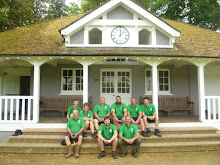
Gardens & Grounds Team 2017


(L-R) Graham, Kieron, Joss, Peter, Andy, Ady, Callum, Ali, Simon and Henry

With all the team now back at work it is time for the team photograph for 2017. Taken in the orchard amongst the apple and pear trees this year's photograph includes Henry, the 13 year old Labrador of Head Gardener Simon, who comes to work everyday and is a honorary, and very important, member of the team.

Tuesday, 3 January 2017

The Swans Have Been Making Headlines In The Local Newpaper

Happy New Year and welcome back to the gardener's blog. The college has reopened its doors today following the Christmas and New year shut down and, whilst the gardening team were enjoying their well earned break, the swans have been making the headlines in the local newspaper.
On the 23rd December, just a few days after the college closed, one of the swans was hit by a vehicle out on Beaumont Street just outside the college entrance. A specialist swan unit was called to assist the injured bird before they took it away to be checked out by a vet. (For the newspaper article and the full story of the accident see the link below).

Bobbies on the beat step in to save intrepid swan in Oxford

For those of you who have been reading the blog over the years you may recall the sad story of the pair of swans last year, see blog entry for 26th August 'A Tragic End For The Pair Of Mute Swans' advising of the death of the female. On the 21st October the remaining swan paired up with a new partner and they have been on the lake ever since until the new swan was involved in this accident, a futher tragic end to the story, maybe? (For the ending to the story on the 29th December, see the link below)

Christmas love story: injured swan returned home for new year with his bird

Following its rescue and treatment the swan has been sexed as a male, a cob, and named Chris, which has lead to more questions and possible answers to the lack of fertilised eggs over the last four years. Since 2012, when the two swans on the lake paired up it was obviously belived that it was a male and female pairing, but when one of the swans died in August it was sexed as a female which would leave a male on the lake. However the new swan has been sexed a male which means that the new pair is male/male? Ali likes to think that the previous pair was, more likely, female/female, hence the reason for the eggs never being fertilised and the new pair is one of the remaining female from the original pair and the new male, cygnets this year, only time will tell if Ali's theory is correct and a truly happy ending to the story of the Worcester College swans.